
CBK Considering Buying Gold to Diversify Foreign Exchange Holdings
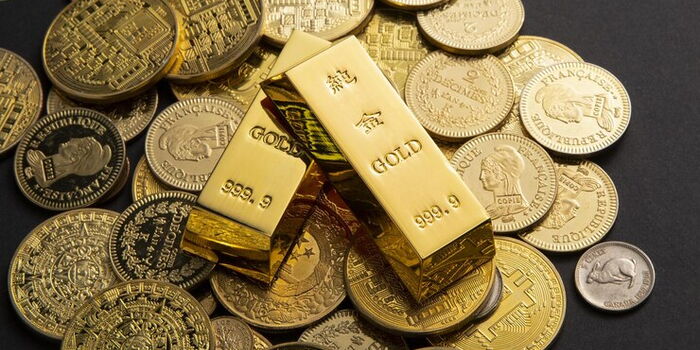
Kenya is set to acquire more gold to diversify its foreign exchange holdings beyond the dollar and other currencies, Central Bank of Kenya Governor Kamau Thugge has revealed. While speaking to Bloomberg, Thugge revealed the CBK is actively considering adding more gold to its reserves amidst reports of current reserves dwindling. However, Thugge did not disclose the timeline of this endeavour. “We have basically a group that is looking at the feasibility of doing it and yes, that’s something that we’re actively considering,” Kamau Thugge noted on the sidelines of the International Monetary Fund and World Bank Spring Meetings. Kenya held gold valued at Ksh169 million ($1.3 million) by end-June, according to the most recent central bank annual report. It owns 600 ounces (close to 20 kilograms) after selling most of its holdings in 1998, according to the IMF. Central banks and investors around the world are stockpiling gold, pushing prices to a record. The precious metal’s run began in early 2024, aided by central banks diversifying holdings to hedge against the dollar and insulate themselves from the threat of sanctions. More recently, countries have increasingly engaged in gold-funded trade. Currently, the global price of an ounce of gold is $3,302 (Ksh428,467), a surge of over 40 per cent. Gold has emerged as the best-performing major commodity this year, driven by geopolitical tensions, economic uncertainty, and strong demand from central banks worldwide. The seemingly low gold reserves contrast with the massive dollar reserves that the country holds. Kenya’s total foreign exchange reserves were reported at $9.6 billion (Ksh 1.2T) in November 2024. This means that gold constitutes less than 0.016 percent of the country’s total reserves. This heavy reliance on a single currency exposes the country to potential risks associated with currency fluctuations, a scenario that Kenya is seeking to avoid. Meanwhile, Thugge also announced that the new International Monetary Fund (IMF) loan Kenya will receive towards the end of the year will be the same as the previous one. “The concessional element of the funds and the policy package attached to them makes it a good package in the current context of elevated global risks,” stated Thugge. Thugge further added that the IMF program and a Eurobond issued last month will enable the country to avoid borrowing more loans anytime soon. “The nation isn’t planning or expecting to go to the international capital markets for a while, following a Eurobond issue last month that helped it rearrange some debt,” he said. “Kenya has a deep local financial market that can help finance its budget and is also looking to others, such as the Middle East, for loans,” the governor added.
Court Freezes Kenya’s Afriswiss Commodities Bank Account in Alleged Gold Fraud

A Kenyan High Court has frozen the bank account of Afriswiss Commodities Ltd following allegations of gold fraud involving a Dubai-based trading company, highlighting Kenya’s growing reputation as a hub for precious metals scams targeting international buyers. Justice Moses Ado of the High Court issued the preservation order on Monday, freezing at least $140,000 (approximately Ksh18 million) held in Afriswiss Commodities’ account at I&M Bank Kenya. The order remains in effect until July 10, 2025, pending further court directions. The case stems from a gold trading agreement signed on May 9, 2024, between SH Trading DMCC, a Dubai-based gold importing firm, and Afriswiss Commodities Ltd, a Nairobi-based precious metals trading company. The deal involved the shipment of 25 kilograms of gold from Kenya to Dubai. According to court documents, SH Trading DMCC paid $118,000 in advance to cover various costs including government royalties, export taxes, insurance, smelting fees, customs handling, and agency charges. The Dubai firm’s majority shareholder, Cord Kabus Dupree, alleged that despite the substantial advance payment, no gold was delivered to the designated port. Lynnwood Farr, CEO of Afriswiss Commodities, allegedly played a central role in executing the agreement, assuring the Dubai firm of reliable gold supply and convincing them to wire funds to the company’s bank account while paying the balance in cash. The case has raised eyebrows due to the alleged involvement of Ministry of Mining officials in facilitating the introduction between the parties. According to Dupree’s testimony, SH Trading DMCC established operations in Kenya after being introduced to key industry players through ministry officials, which gave the firm confidence to pursue the transaction. This connection to government officials mirrors patterns identified in previous gold fraud cases, where scammers leverage perceived government endorsement to build credibility with international buyers. Growing Pattern of Gold Fraud The Afriswiss case appears to be part of a broader pattern of gold fraud targeting international buyers, particularly from the Middle East. The promise of quick riches is used to lure in unsuspecting marks, often westerners seeking to play out a modern rendition of the Scramble for Africa, according to previous investigations into Kenya’s gold scam networks. Recent reports indicate that fifty-six per cent of the UAE population is subject to a scam attempt at least once a month, with gold investment scams being particularly prevalent among cross-border fraud schemes. In a significant development, Afriswiss Commodities, through its CEO, has admitted to receiving $136,940, including interest, for gold that was never delivered. The company has also acknowledged causing the Dubai merchant an estimated business loss of $2.5 million, though this figure likely represents lost business opportunities rather than direct financial losses. The admission suggests the company may not contest the basic facts of the case, potentially streamlining legal proceedings and recovery efforts. Kenneth Amondi, representing SH Trading DMCC, argued successfully for the asset preservation order, expressing concern that the Kenyan company might disown the deal and transfer funds before case conclusion. The freezing order is designed to ensure that recoverable assets remain available should the Dubai firm prevail in court. The case is being heard at the Milimani Law Courts, which has become a frequent venue for international commercial disputes involving Kenyan companies and foreign investors. The Afriswiss case underscores ongoing challenges in Kenya’s gold trading sector, where legitimate mining operations coexist with sophisticated fraud schemes. Fraudsters often pretend to be government officials or reputable gold dealers, making it difficult for international buyers to distinguish between legitimate and fraudulent operations. Legal experts recommend that foreign gold buyers verify that sellers hold valid licenses from the Ministry of Mining and are registered with the Registrar of Companies, while also demanding proper documentation including KRA PIN and business registration certificates. The case also highlights Dubai’s position as a major gold trading hub, with the Dubai Multi Commodities Centre (DMCC) serving as a key facilitator of international precious metals trade. However, this prominence has also made Dubai-based firms attractive targets for international fraud schemes. The proliferation of gold fraud cases involving UAE nationals has potential implications for Kenya-UAE trade relations. A recent case involving a rich Emirati highlights the power that Nairobi conmen can have and Kenya’s role as a smuggling route for gold from the eastern Democratic Republic of Congo, according to regional trade analysis. The court is expected to issue further orders on July 10, 2025, which may include extending the asset freeze or providing directions for the main case proceedings.
Maniema Overtakes South Kivu as DRC’s Top Legal Gold Hub
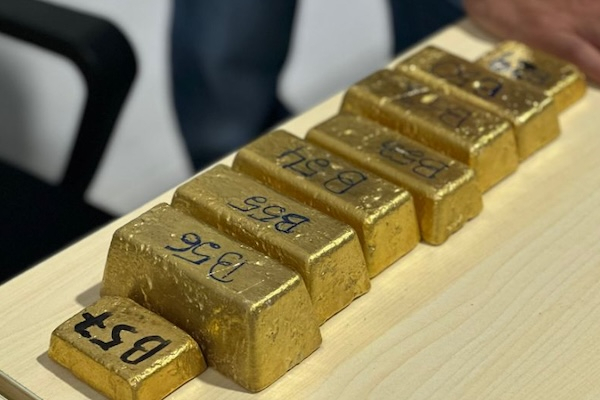
Maniema province has become the Democratic Republic of Congo’s leading center for legal artisanal gold exports. Since DRC Gold Trading SA opened its Kindu branch on March 25, 2025, the province has exported 447.028 kilograms of gold. That’s 42.3{c9ca0e8abf81efd8d7db2956e9a46c4f7b2773e9c7ba6d2e9145a1920c5341dd} of all the country’s official artisanal gold exports. The shift follows DRC Gold Trading SA’s withdrawal from South Kivu. The region once accounted for over 90{c9ca0e8abf81efd8d7db2956e9a46c4f7b2773e9c7ba6d2e9145a1920c5341dd} of legal artisanal gold exports in 2023 and 2024. But worsening insecurity, including the advance of M23 rebels, forced the company to halt operations there in March. As a result, most South Kivu gold now avoids official channels and fuels informal cross-border trade. This disruption undermines the company’s February pledge to export at least 5 tons of artisanal gold in 2025, worth about $1.3 billion. To fill the gap left by South Kivu, DRC Gold Trading SA opened new branches this year in Buta (Bas-Uélé), Bunia (Ituri), and Isiro (Haut-Uélé). Yet early results show exports lag far behind expectations. Nationwide, the company shipped only 1,057.88 kilograms of gold in the first half of 2025, meeting just 21{c9ca0e8abf81efd8d7db2956e9a46c4f7b2773e9c7ba6d2e9145a1920c5341dd} of its annual target.